St Vincent Lodge
Just DesertsSt Vincent Lodge is a purpose-built lodge on the remaining lands of Grenadine Reef, created by Elizabeth Bennet and Fitzwilliam Darcy as part of their long-term restructuring of the estate. Its name preserves the geographical origin of the Pentland fortune: the nearest large island to the reef where Sir David Pentland discovered the wrecked Spanish treasure ship that secured his knighthood and made the family’s later expansion possible.
Origin and Name
The lodge occupies the final 1,000 acres of the original Grenadine Reef estate, specifically the land around the dower house. Elizabeth Bennet and Fitzwilliam Darcy consulted an atlas and nautical charts before choosing its name, selecting St Vincent because it was the nearest large island to the location where Sir David Pentland had found the wreck. The name therefore turns a maritime landmark into a domestic one: a distant wreck site is converted into a permanent place of family memory.
Sir David’s wealth came from his service as captain of HMS Glory. In 1770, after the ship survived the edge of a hurricane, his crew found a Spanish treasure galleon that had run aground on a reef near the Grenadine Islands. They salvaged a substantial portion of its treasure before the wreck was destroyed and sank. Sir David was knighted for the exploit, and his share of the prize enabled the Pentlands to purchase Grenadine Reef. St Vincent Lodge consequently stands at the end of a chain running from naval danger and imperial commerce to estate ownership and inheritance.
Estate Function
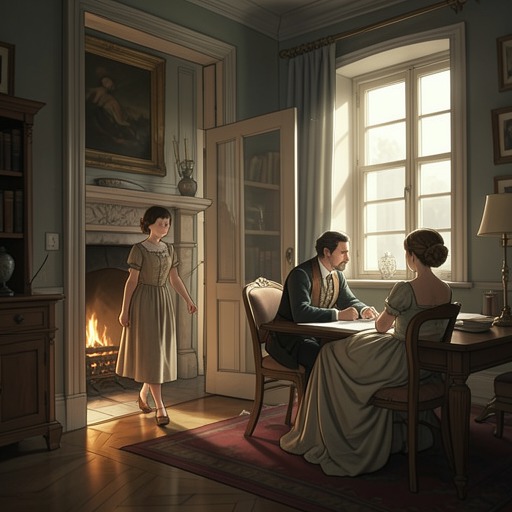
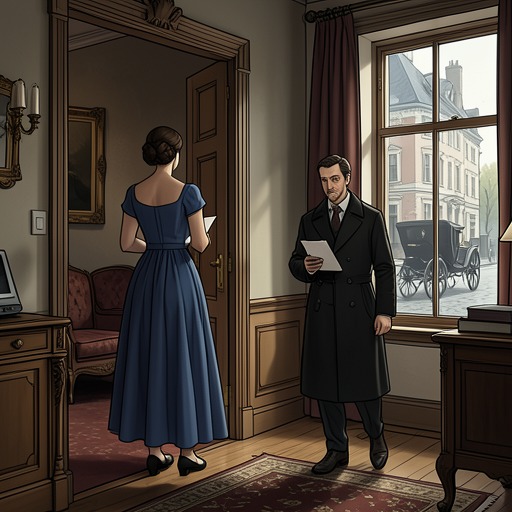
Elizabeth and Fitzwilliam Darcy use St Vincent Lodge when they visit Grenadine Reef with their family. It is not described as a separate great estate but as a carefully retained portion of the reorganized property, attached to the land surrounding the dower house. Its location preserves the dower house’s continuing institutional and familial importance while giving the Darcys a private base during their visits.
The lodge also marks the transformation of Grenadine Reef from Sir David and Lady Radha Pentland’s quiet household into a planned multigenerational estate. Sir David and Lady Radha had lived quietly, spent little on fashionable entertaining, and invested their yearly surplus. Their wealth eventually expanded Grenadine Reef and allowed them to acquire smaller estates. After Sir David’s death, the property was divided among the next generation rather than simply passed intact through a single male line.
Inheritance and Relocation
The estate plan assigns 3,000 acres of Grenadine Reef to Helena Darcy, the only daughter of Elizabeth and Fitzwilliam Darcy. Their sons receive other portions: David receives 2,000 acres from Grenadine Reef, while Richard receives the lands formerly belonging to Longbourn. The remaining estates in Scotland, Dorset, and Kent are allocated among Andrew, Michael, and Bartholomew, while Pemberley goes to Bennet, the family’s name for the second-born son.
St Vincent Lodge is central to the practical consequences of this arrangement. When Helena comes into her inheritance, Edward Gardiner and Madeline Gardiner are expected to move there from their existing home. Elizabeth recognizes that this will feel like a painful displacement, since the Gardiners have been a stable household and an important source of support, but the move is presented as part of a plan Elizabeth and Fitzwilliam Darcy have been preparing for a decade. The lodge thus absorbs the consequences of succession while preserving the Gardiners’ place within the extended family estate.
The property also has a prospective future beyond the immediate inheritance. Annabel, Helena’s older cousin, has long been heavily involved in running the dower house and gives no indication that she wishes to marry. Although she is twenty-six and not treated as a spinster, she is expected eventually to inherit the St Vincent estate, with a niece or cousin of the next generation designated as her heiress. The lodge therefore functions within a layered succession plan that accommodates daughters, younger sons, adult dependants, and women whose lives do not follow marriage-centered expectations.
Narrative Significance
St Vincent Lodge embodies the novel’s movement from inherited property as a rigid male succession mechanism toward estate planning based on responsibility, use, and family welfare. The original Grenadine Reef fortune began in a dangerous salvage operation, but its later value depends on restraint, investment, and deliberate redistribution. The lodge is the architectural expression of that second stage: it is built not to display wealth ostentatiously but to make a complex future arrangement workable.
Its name also gathers the book’s cross-cultural and maritime histories into the English domestic landscape. Lady Radha Pentland’s life carried her from Kutch through forced movement, slavery, rescue near the Arabian Peninsula, a Spanish nunnery outside Cadiz, piracy, Barbados, and finally Britain. Her survival and marriage to Sir David helped make Grenadine Reef a home shaped by migration rather than by an uncomplicated inherited lineage. St Vincent Lodge, named through nautical research and used by a later generation, quietly preserves that history while turning it toward continuity.
Finally, the lodge is a space of negotiated belonging. It supports Elizabeth and Fitzwilliam Darcy’s visits, offers Edward and Madeline Gardiner a future home, remains connected to the women’s work at the dower house, and becomes part of Helena’s inheritance. Rather than merely signify rank, it organizes relationships among property, care, memory, and succession. Its decisive narrative importance lies in showing how a fortune born from wreckage can be redirected into a stable and deliberately inclusive family future.